The rapidly evolving field of artificial intelligence (AI) continues to push the boundaries of what machines can achieve, offering groundbreaking applications that transform industries.
Among the most intriguing developments is the rise of agentic AI agents—intelligent systems capable of autonomous action that resemble human decision-making processes more closely than ever before. Understanding the architecture behind these agents is vital in appreciating their capabilities and potential in our technology-driven world.
The Core Concepts of Agentic AI
Agentic AI agents embody the principles of autonomy, adaptability, and continuous learning. They are designed to operate independently, make decisions without direct human intervention, and evolve their behaviors through learning from experiences. This level of sophistication necessitates a robust architectural foundation capable of supporting complex decision-making processes and seamless interaction with dynamic environments.
Autonomy and Decision-Making
The central pillar of agentic AI's architecture is autonomy, which allows agents to make decisions that align with pre-defined goals, even in unpredictable circumstances. This is achieved through integrating various components such as decision-making algorithms, knowledge bases, and perception systems. The architecture must enable real-time processing and rapid adaptation to changes, fostering a deeper understanding of the context in which the AI operates.
Key Architectural Components
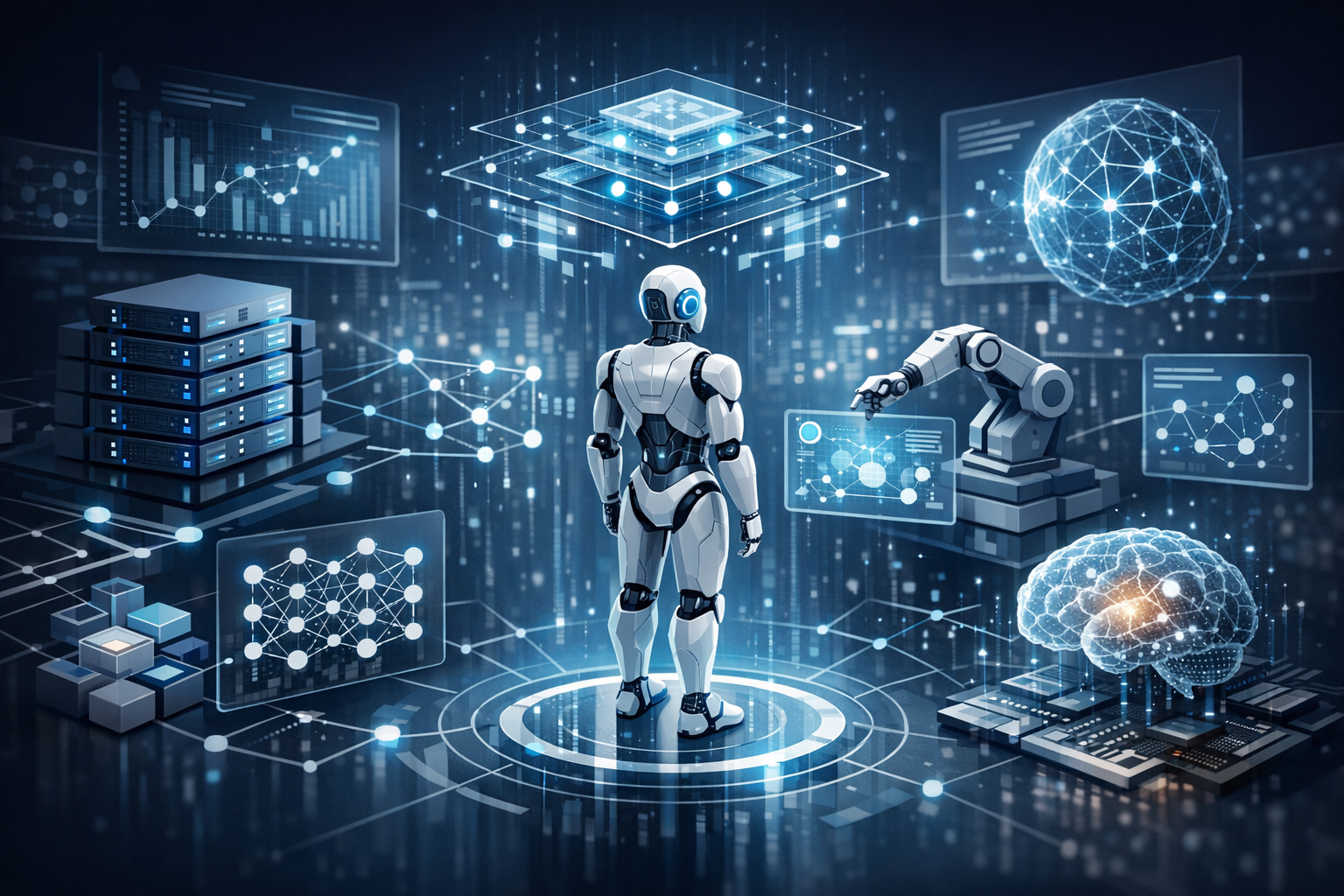
Developing effective agentic AI agents requires a blend of several technological elements meticulously integrated to work in unison. Below, we explore some of the architectural components vital to agentic AI:
1. Perception Systems
Perception systems are integral to agentic AI, providing the sensory capabilities necessary to interpret their surroundings. These systems typically consist of sensors and data acquisition tools that gather information from the agent's environment. Advanced algorithms process this data into meaningful insights, allowing the agent to form an accurate representation of its operational context.
2. Cognitive Architecture
At the core of decision-making lies cognitive architecture, an intricate system akin to a human brain's functionality. It encompasses computational models that simulate reasoning and understanding processes, drawing from theories of human cognition. Cognitive architectures such as ACT-R or SOAR provide frameworks for implementing complex thinking and learning patterns, equipping agents with problem-solving skills and adaptive behaviors.
3. Machine Learning and Deep Learning Models
Machine learning (ML) and deep learning (DL) models empower agents to learn from data without explicit programming. ML models analyze historical data to predict future outcomes, while DL networks, especially neural networks, offer hierarchical processing layers that enrich feature detection. For agentic AI, these models underpin a perpetual learning cycle, refining performance over time through experience.
4. Action and Planning Modules
Action and planning modules translate cognitive decisions into tangible actions. These modules are responsible for executing strategies, using optimization algorithms to choose actions that maximize goal achievements. They house planning systems that evaluate possible scenarios, helping agents to navigate obstacles and capitalize on opportunities efficiently.
5. Communication Interfaces
An often-underestimated component is the communication interface, which facilitates interaction between agents and other entities, including humans, other AI, or wider systems. This interface ensures smooth data exchange and response synchronization, essential in scenarios demanding collaboration or shared task execution.
Agentic AI in Practice: Real-World Applications
The architecture of agentic AI agents supports a range of real-world applications, marking significant progress in several sectors. For example, in digital marketing, agents autonomously manage campaigns, adapting to consumer behavior and optimizing strategies without human oversight. Similarly, autonomous vehicles leverage agentic AI to safely navigate complex road networks, balancing numerous variables such as traffic patterns and pedestrian movements.
In healthcare, agentic AI agents provide diagnostic support, analyzing patient records or real-time medical data to flag anomalies and propose potential interventions. These applications reflect the transformative potential of agentic AI, enhancing efficiency, reducing costs, and ultimately creating more responsive systems tailored to specific needs.
Challenges and Future Directions
While the potential of agentic AI is considerable, its architecture demands continuous evolution to address existing challenges. Ensuring security and ethical integrity is paramount, as autonomous agents must operate transparently and make decisions aligned with human values. Furthermore, integration challenges persist, particularly in harmonizing AI functionality with existing technologies and regulatory landscapes.
Looking forward, advances in AI research and the broader adoption of hybrid architectural models promise to enhance agentic AI capabilities. Quantum computing, for instance, could unlock unprecedented processing power, enabling more sophisticated models and real-time decision-making. Additionally, cross-disciplinary insights from neuroscience and psychology may inform more intuitive AI cognitive architectures, drawing even closer parallels between human and machine reasoning processes.
Conclusion
The architecture powering agentic AI agents epitomizes a synergy of cutting-edge technologies, orchestrated to produce systems with advanced autonomy and intelligence. As we continue to refine these architectures, their potential to revolutionize diverse industries becomes more apparent, promising a future where AI plays an even more integrated role in facilitating human progress. Recognizing and overcoming the ongoing challenges will be key to unlocking the full benefits of this exciting technological frontier.