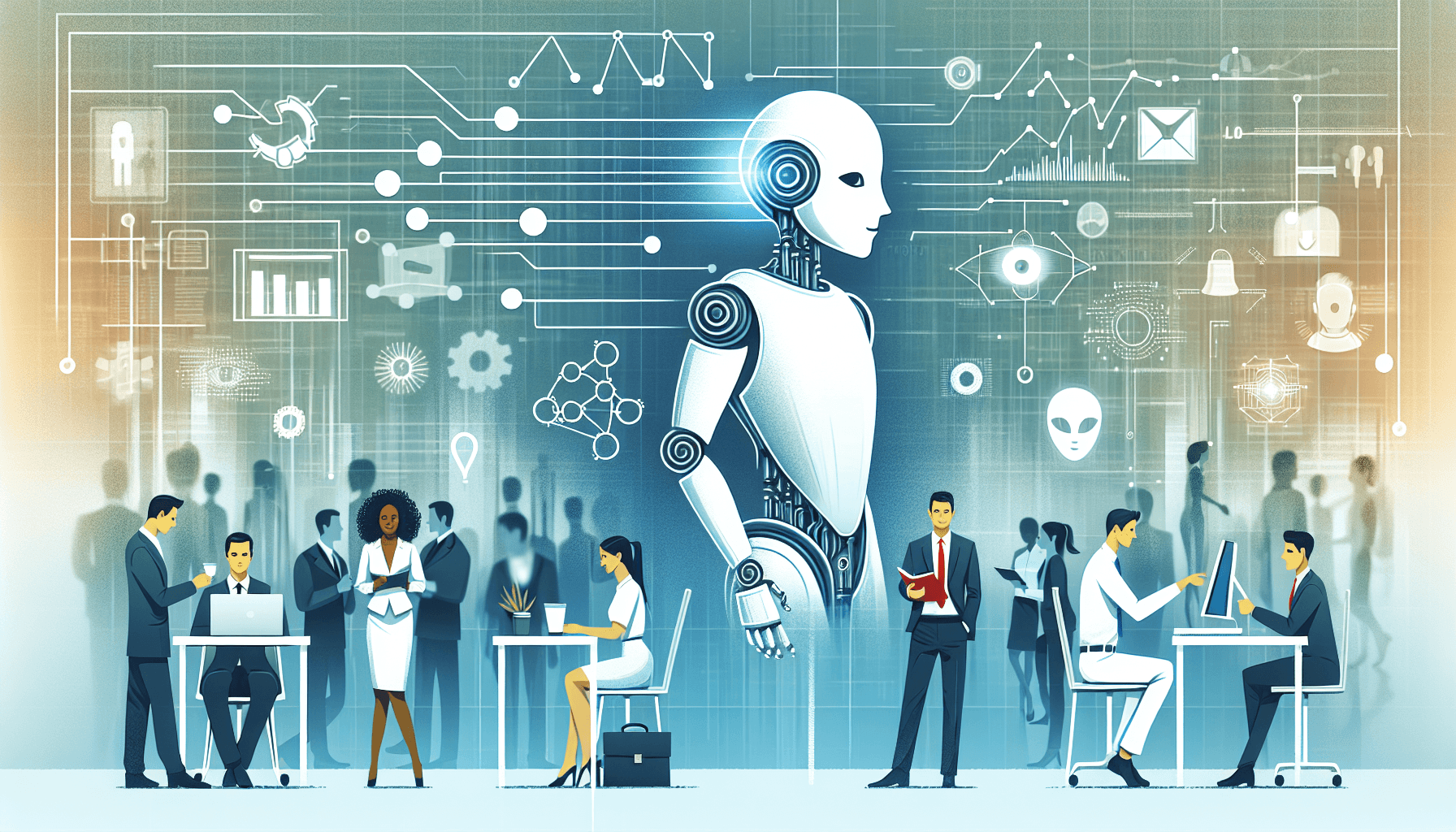
The advent of artificial intelligence (AI) agents as integral members of remote teams marks a revolutionary shift in how businesses operate. As AI continues to evolve and mature, organizations are increasingly incorporating AI agents to handle tasks previously managed by human workers. This evolution raises important questions about the future of work, particularly how human jobs will be affected as these digital colleagues integrate into our workflows.
The Rise of AI Agents in Remote Work
In recent years, the rise of remote work has paved the way for AI agents to become an essential part of the workforce. This transition was accelerated by the COVID-19 pandemic, which forced numerous companies to shift towards remote operations. Now, as the dust settles, businesses are optimizing their workflows through technology and automation.
Current trends suggest that AI agents are already capable of managing various routine tasks—from scheduling meetings and answering customer queries to performing mundane data entry jobs. Companies like IBM and Microsoft have made significant advancements in AI, providing businesses with sophisticated AI tools that can execute complex operations with minimal oversight.
Why Hire an AI Agent?
There are several compelling reasons why companies are increasingly choosing to "hire" AI agents to join their remote teams:
-
Cost-Efficiency: AI agents offer substantial cost savings by reducing the need for human labor in repetitive, rule-based tasks. This allows financial resources to be reallocated towards strategic initiatives that require human creativity and direction.
-
Scalability and Flexibility: Unlike human employees, AI agents can process large volumes of data at incredible speeds, enabling companies to scale their operations smoothly and respond to market demands swiftly.
-
24/7 Availability: AI agents do not require breaks or sleep, allowing them to provide round-the-clock service, particularly beneficial for customer service and support roles, helping maintain high levels of customer satisfaction.
-
Improved Accuracy and Efficiency: AI agents are less prone to errors when handling data-driven tasks, improving the accuracy and efficiency of operations.
How AI Agents Complement Human Jobs
Despite fears that AI might replace human jobs, it is crucial to recognize that AI agents often complement rather than compete with human skillsets. AI excels in handling tasks that involve data analysis and repetitive processes, leaving more creative and interpersonal tasks for humans. This symbiotic relationship can enhance productivity and job satisfaction.
Case Study: Human-AI Collaboration at TechCorp
TechCorp, a global software company, integrated AI agents with their remote sales team. The AI handles preliminary customer interactions, using chatbots to ask and answer standard queries. This allows human sales representatives to focus on building deeper relationships with clients, leading to a 30% increase in sales conversions.
Potential Impact on Jobs
While AI agents offer numerous benefits, their integration into teams does necessitate a shift in how jobs are structured. Here’s what this means for your current role:
-
Skill Evolution: As AI agents take over routine tasks, human workers will need to upskill. Gaining expertise in AI technology, data analysis, and emotional intelligence will be key to staying relevant.
-
Job Redefinition: Some roles may become obsolete, while new roles will emerge that involve managing and working alongside AI technologies. As a result, there is a growing demand for AI ethicists, AI trainers, and data scientists.
-
Increased Focus on Creativity: With AI managing data-heavy tasks, humans will have more opportunity to engage in creative problem-solving, innovation, and strategic thinking, potentially leading to more fulfilling job roles.
The Ethical Considerations
The integration of AI into the workplace raises several ethical concerns. Ensuring that AI applications are aligned with ethical guidelines is vital to prevent biases, protect privacy, and safeguard employment. Companies must strive for transparency in AI deployment, ensuring that employees understand how AI is being used and trained.
Additionally, organizations must address potential bias in AI systems. AI technologies can unintentionally perpetuate or even exacerbate existing prejudices unless adequately monitored and regulated. Developing clear guidelines will be critical in achieving fairness and equality.
Preparing for a Future with AI
Organizations must prepare their teams for the growing inclusion of AI technologies. Here are several ways to foster a smooth transition:
-
Education and Training: Invest in comprehensive training programs that educate employees about AI’s capabilities and limitations, enabling them to work effectively alongside AI agents.
-
Open Communication: Maintain transparency about the company’s plans for AI integration. Encourage open dialogues about how AI will impact each role to alleviate fear and build trust.
-
Empowered Leadership: Encourage leadership that understands the balance between technology and human interaction, guiding teams through changes with empathy.
-
Continuous Monitoring: Regularly reassess AI interventions to ensure they deliver the intended benefits without compromising human employment or well-being.
Conclusion
Integrating AI agents as "new hires" in remote teams signifies a transformative period for businesses. While AI can handle specific tasks more efficiently and affordably than humans, it is ultimately meant to complement human skills rather than replace them. Embracing this change involves adapting to a new landscape where continuous learning, adaptation, and ethical considerations play pivotal roles.
By preparing for these changes now, organizations and employees alike can thrive in a future where AI and human ingenuity coexist, driving innovation and achieving new heights of productivity.