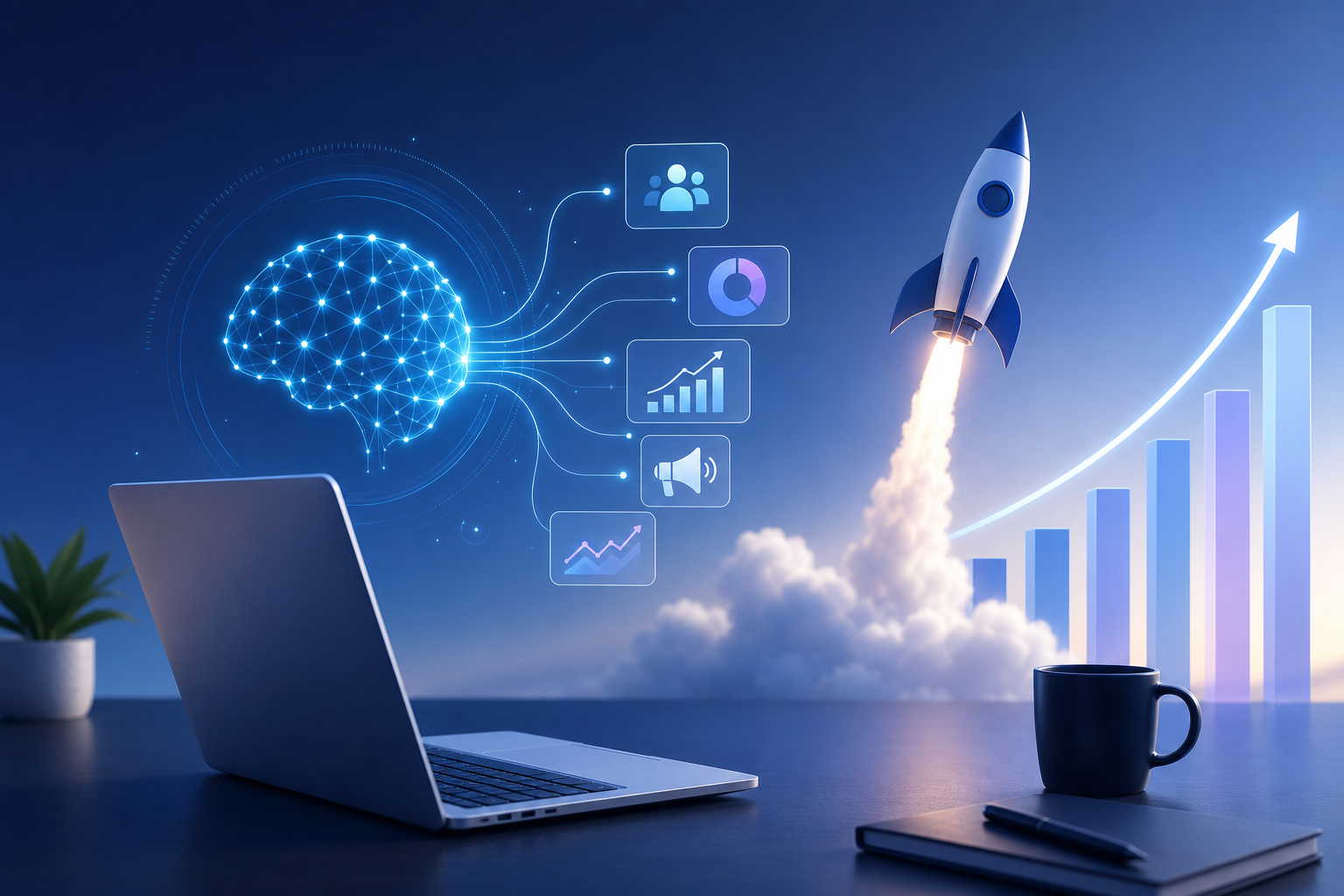
AI is no longer a nice-to-have for SaaS marketing. In 2026, it’s becoming the engine behind smarter campaigns, faster content creation, sharper targeting, and better customer experiences.
For early-stage and growing SaaS startups, that matters a lot. You’re competing with bigger brands, tighter budgets, and a market that changes fast. AI can help level the playing field.
The good news? You do not need a massive team or an enterprise budget to benefit. Today’s AI tools are more accessible, more integrated, and more practical than ever. The smartest SaaS founders are using AI not just to save time, but to make better decisions and move faster.
Why AI matters more than ever in SaaS marketing
The SaaS market is crowded. Buyers are research-savvy, sales cycles can be long, and attention spans are short. At the same time, search behavior is changing. More users are turning to AI-powered search tools, conversational assistants, and answer engines instead of relying only on traditional Google searches.
That shift is huge for marketing strategy.
If your startup wants to stay visible, your content, messaging, and lead generation strategy need to adapt. AI can help you:
- create content faster
- personalize outreach at scale
- analyze campaign performance in real time
- predict which leads are more likely to convert
- improve customer retention with smarter lifecycle marketing
In other words, AI helps you do more with less, which is exactly what SaaS startups need in 2026.
Use AI to create better content, faster
Content marketing is still one of the strongest growth channels for SaaS, but the volume game has changed. Publishing more generic blog posts is not enough. You need useful, original, and search-intent-driven content.
AI can help your team research keywords, map content clusters, generate outlines, and draft first versions of posts, landing pages, emails, and product explanations. That saves time, but the real win is strategic focus. Instead of spending hours on blank-page syndrome, your team can spend more time refining the angle, adding expert insights, and matching the content to buyer intent.
A strong 2026 approach is to combine AI with human expertise. Let AI surface trending topics, common customer pain points, and competitor gaps. Then have your team shape those ideas into content that sounds authentic and specific to your product.
This matters even more now because search engines and AI answer tools reward content that is clear, credible, and helpful. Thin, generic AI text will not cut it.
Personalization is the new conversion driver
One of the biggest marketing trends in 2026 is hyper-personalization. SaaS buyers expect messages that reflect their industry, company size, role, and stage in the buying journey. AI makes that possible at scale.
Instead of sending the same email sequence to everyone, AI can segment your audience more intelligently. It can analyze behavior like page visits, feature usage, demo requests, and content engagement to create more relevant follow-ups. That means your startup can deliver the right message at the right time without manually building dozens of workflows.
Here are a few ways SaaS startups are using AI for personalization:
- dynamic website messaging based on visitor intent
- customized email nurturing for different buyer personas
- personalized onboarding flows for free trial users
- tailored product recommendations based on usage patterns
When people feel like your product understands their needs, conversion rates usually improve.
AI-powered lead generation is getting smarter
Lead generation has evolved a lot in the last year. AI is now helping startups identify stronger prospects earlier in the funnel. Instead of chasing every lead equally, your team can prioritize those with the highest intent and fit.
This is especially valuable in SaaS, where sales teams often waste time on low-quality leads. AI tools can score leads based on behavior patterns, firmographic data, and engagement signals. They can also help your team spot buying signals across channels, such as webinar attendance, repeated pricing page visits, or product comparison searches.
The result is a more efficient pipeline.
In 2026, many startups are also combining AI with conversational marketing. Chatbots and AI assistants are not just answering support questions anymore. They are qualifying leads, recommending plans, booking demos, and guiding prospects to the next best step.
Smarter ad campaigns with less waste
Paid acquisition is getting more expensive, and SaaS startups feel that pressure fast. AI helps reduce waste by improving targeting, creative testing, and budget allocation.
Modern ad platforms already use AI heavily, but startups can go further by using AI tools to test headlines, analyze audience segments, and predict which creatives are likely to perform best. Some teams are even using AI to generate multiple ad variants in minutes, then testing them quickly to find winning combinations.
This is where a fast feedback loop matters. AI can monitor performance across channels and highlight what’s working before you’ve burned through too much spend. That can make a huge difference for startups with limited budgets.
The biggest mistake? Letting AI run everything automatically without strategy. AI is powerful, but it still needs strong positioning, audience knowledge, and creative direction.
Improve retention with AI-driven lifecycle marketing
Marketing does not stop after acquisition. In SaaS, retention and expansion are just as important as new customer growth. AI can help you improve both.
By analyzing product usage data, AI can identify users who may be at risk of churning. It can also trigger timely messages that guide users back to value. For example, if a customer stops using a core feature, AI can prompt an in-app tip, a help article, or a success email at exactly the right moment.
AI can also help you identify opportunities for upsells and cross-sells. If a customer’s usage suggests they are ready for more advanced features, your team can reach out with a relevant upgrade offer instead of a generic sales pitch.
That kind of timing makes lifecycle marketing feel helpful, not pushy.
Keep the human layer strong
This is the part many startups miss. AI can speed things up, but your brand still needs a human voice. People buy from companies they trust, and trust comes from clarity, honesty, and personality.
Use AI for efficiency, not to erase your brand identity. Review outputs carefully. Add real customer stories. Include founder insights. Share lessons from your own product journey. The best SaaS marketing in 2026 will feel smart, useful, and human.
Also, stay aware of privacy and compliance. As AI becomes more embedded in marketing, buyers are paying closer attention to how their data is used. Transparency is now part of good marketing.
Final thoughts
AI is changing SaaS marketing from the ground up. In 2026, the startups that win will not be the ones using the most tools. They’ll be the ones using AI with focus, creativity, and a clear strategy.
If you want to grow faster, spend smarter, and connect better with your audience, now is the time to build AI into your marketing engine. Start with one area, measure the results, and expand from there. Small improvements compound quickly.
For SaaS startups, AI is not just a trend. It’s a competitive advantage.