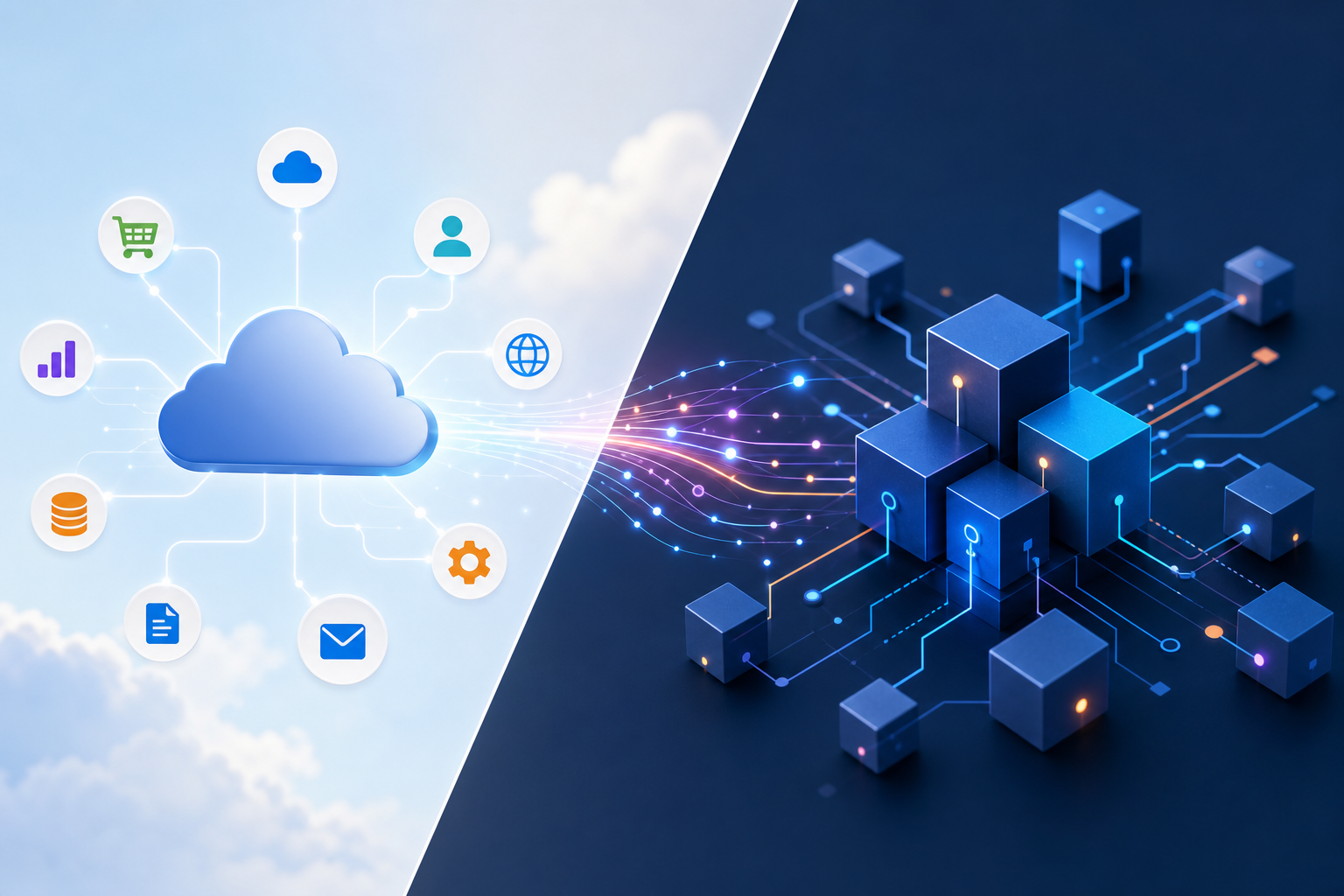
If you’re comparing iPaaS vs. custom integrations, you’re probably trying to solve the same core problem: how do you get your systems talking to each other without creating a maintenance nightmare?
That question is getting more urgent in 2026. Businesses are juggling more SaaS tools, more APIs, more data sources, and more pressure to move fast. At the same time, AI, automation, and composable architecture are changing what “good integration” even looks like.
The short version: iPaaS is becoming smarter and faster, while custom integrations are becoming more selective and strategic. In many organizations, the real trend is not choosing one forever. It’s using both in the right places.
What’s driving the integration conversation right now?
A few big shifts are reshaping the market:
- AI adoption is accelerating
- SaaS sprawl is still growing
- Businesses want faster implementation
- Security and governance are under tighter scrutiny
- Teams are expected to do more with less
That combination is pushing leaders to rethink whether every integration deserves a custom build. In many cases, the answer is no. But in others, especially where business logic is complex, custom still wins.
iPaaS is evolving fast
iPaaS, or integration platform as a service, has moved far beyond simple drag-and-drop workflows. Today’s platforms are adding features that used to require engineering support.
1. AI-assisted integration building
One of the biggest trends is AI helping design, map, and troubleshoot integrations. Some platforms now suggest field mappings, identify errors, and even generate workflow steps. That matters because integration projects often slow down during setup and debugging.
AI doesn’t remove the need for expertise, but it does lower the barrier to entry. That makes iPaaS more appealing for lean teams and business users who need to move quickly.
2. Better support for event-driven architecture
Modern businesses want systems to respond in real time. Instead of waiting for batch syncs, they want events to trigger actions instantly. iPaaS vendors are responding with stronger support for webhooks, event streaming, and near real-time orchestration.
This is especially useful in customer experience, order management, and operations, where delays can create visible friction.
3. More governance and observability
Integration failures used to be hidden until something broke. Now, companies want monitoring, logging, alerting, and audit trails built in. This trend is being driven by compliance needs and by the simple fact that distributed systems are harder to manage.
Modern iPaaS tools are adding dashboards that help teams see what’s working, what failed, and where data moved. That visibility is becoming a major buying factor.
4. API-first and composable integration
The rise of composable architecture has made API-first design more important than ever. iPaaS platforms are increasingly acting as orchestration layers that connect APIs, SaaS apps, and internal services into flexible business processes.
This is a strong fit for companies that want to swap tools without rebuilding everything from scratch.
Custom integrations are not going away
Even with all the momentum behind iPaaS, custom integrations still matter. In fact, they’re becoming more valuable in the right scenarios.
1. Complex business logic still needs custom code
Some workflows are too specific for prebuilt connectors or visual builders. If your business rules are highly specialized, or if your systems require precise control over transformation logic, custom integrations may be the better choice.
Examples include:
- proprietary legacy systems
- complex pricing engines
- highly regulated workflows
- custom data synchronization rules
When the process is unique enough, custom code can be cleaner and more reliable than forcing everything into a generic template.
2. Performance and scale can favor custom builds
For very high-volume environments, custom integrations can offer better performance tuning. If you need to optimize for latency, throughput, or resource use, a hand-built solution may be more efficient than a platform abstraction.
This is especially relevant in industries like fintech, logistics, and eCommerce, where speed and precision matter.
3. Ownership and flexibility are still big advantages
Some companies prefer custom integrations because they want full control over the codebase, deployment, and roadmap. That can reduce dependency on a third-party platform and make it easier to tailor behavior over time.
Of course, that control comes with maintenance responsibilities. But for organizations with strong engineering teams, that tradeoff can make sense.
The biggest emerging trend: hybrid integration strategies
The biggest shift in 2026 is not “iPaaS wins” or “custom wins.” It’s hybrid integration architecture.
That means companies are using iPaaS for the fast, repeatable, low-risk workflows and custom integrations for the edge cases.
This approach is gaining traction because it balances speed and flexibility. For example:
- use iPaaS to sync CRM and marketing data
- use custom services for pricing, inventory, or compliance workflows
- use iPaaS to orchestrate notifications and approvals
- use custom code for performance-sensitive operations
This hybrid model helps organizations avoid overengineering while still preserving the ability to handle unique business needs.
What buyers are asking for now
If you’re evaluating iPaaS vs. custom integrations, current buying trends suggest teams care about more than just features. They want:
- faster time to value
- lower long-term maintenance
- strong security controls
- easy monitoring and troubleshooting
- support for AI and automation
- integration across SaaS and internal systems
The decision is increasingly about lifecycle cost, not just initial build effort. A custom integration might look cheaper on paper, but if it requires ongoing developer attention, the total cost can rise quickly.
On the other hand, iPaaS can be a great accelerator, but only if the platform matches your complexity level and doesn’t become a black box.
Practical guidance for choosing the right path
Here’s a simple rule of thumb:
Choose iPaaS when you need:
- speed
- standard connectors
- low-code workflows
- easier monitoring
- business user participation
Choose custom integrations when you need:
- unique business logic
- advanced performance tuning
- deep system control
- special security or compliance requirements
- highly tailored data processing
Choose both when you want to scale efficiently without locking every process into the same pattern.
Final thoughts
The future of integration is not about one tool replacing the other. It’s about matching the right approach to the right job.
iPaaS is becoming smarter, more AI-driven, and more enterprise-ready. Custom integrations are becoming more focused, more strategic, and more reserved for the cases where differentiation matters.
If your company is modernizing its stack, the best move is to build an integration strategy, not just pick a platform. In today’s market, the winners are the teams that can move quickly, stay flexible, and keep complex systems under control.
That’s the real trend behind iPaaS vs. custom integrations: less ideology, more fit-for-purpose execution.