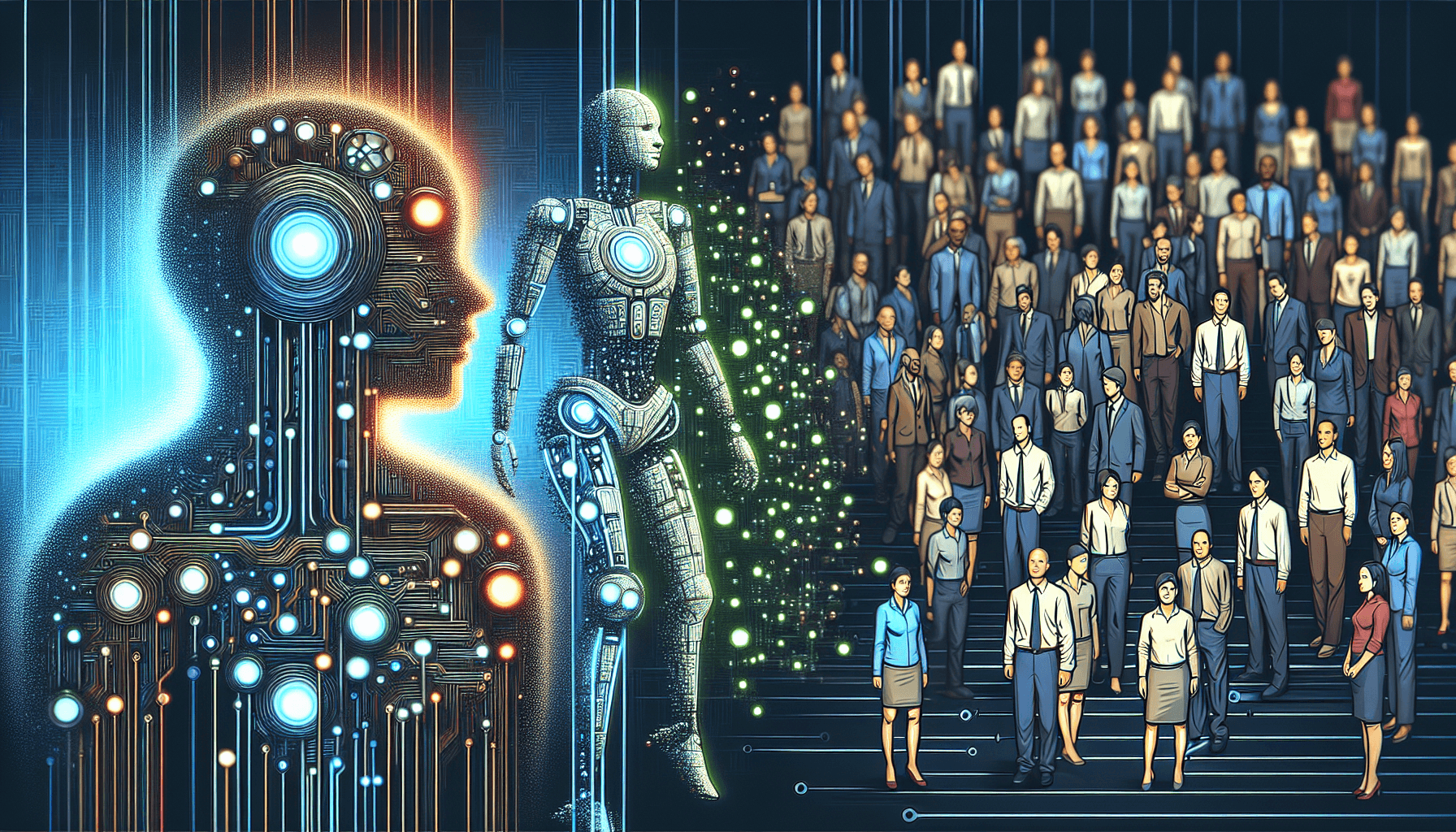
The surge in artificial intelligence (AI) development is redefining what teamwork means. Once, collaboration was a uniquely human trait, rooted in empathy, communication, and collective intelligence.
Yet with the advent of agentic AI swarms—networks of autonomous intelligent agents collaborating in real time—the playing field has shifted. These sophisticated machine teams are starting to outperform even our best human groups in speed, scale, and problem-solving ability.
But why, and how? Can agentic AI swarms really collaborate better than us? And what does this mean for the future of work and innovation? Let’s explore this fascinating evolution in collective intelligence.
What Are Agentic AI Swarms?
Before comparing them to human teams, let’s define agentic AI swarms. The term describes interconnected AI agents, each possessing autonomy (agency), intelligence, and the ability to communicate and coordinate with other agents. Think of it as a hive mind—many independent bots working harmoniously towards shared goals, often in dynamic, unpredictable environments.
A classic example is a drone swarm: each drone processes environmental data, communicates with others, and collectively chooses optimal paths for surveillance, search and rescue, or delivery. In the digital world, agentic AI swarms might comprise software bots scouring data, optimizing logistics, composing music, or even brainstorming novel solutions.
The Strengths of Human Teams
Human teamwork is legendary. We blend logical reasoning, emotional intelligence, intuition, creativity, and shared experience. Our communication goes beyond language—incorporating nuance, context, and body language. Human teams can handle ambiguity, adapt to changing norms, and inspire each other.
Key advantages include:
- Empathy: Understanding motivations, anticipating reactions, and smoothing over conflict.
- Adaptability: Ability to pivot strategies when facing unprecedented challenges.
- Creativity: Seeing connections and abstract possibilities, especially in open-ended problems.
- Moral Reasoning: Applying ethical judgment and societal values.
But even the best teams have challenges: communication breakdowns, biases, groupthink, ego clashes, and fatigue.
The Advantages of Agentic AI Swarms
Agentic AI swarms, on the other hand, operate very differently—with unique strengths that can, in many cases, surpass humans.
1. Scale and Speed
AI swarms process and exchange information orders of magnitude faster than people. Tasks like analyzing millions of data points, simulating scenarios, or optimizing routes, which would take human teams days, can be handled in minutes or seconds.
2. Consistency and Objectivity
AI agents don’t suffer from fatigue, mood swings, or cognitive biases. Their decisions remain consistent, reproducible, and transparent—an advantage in fields requiring precision, such as logistics, manufacturing, or data analysis.
3. Specialization Without Silos
Each AI agent can be uniquely specialized for a subtask—yet seamlessly share insights with others. There’s no ego, siloed knowledge, or reluctance to collaborate. Swarms can dynamically reconfigure, bringing the “right agent for the job” to every moment.
4. 24/7 Operation
Unlike humans, AI swarms never sleep. They can monitor, learn, coordinate, and solve problems around the clock—critical for real-time situations like cybersecurity or financial trading.
5. Limitless Expansion
While human teams struggle to scale beyond a few dozen members, digital swarms can number in the tens of thousands, operating as one unified intelligence network.
When AI Swarms Outperform Humans
These strengths mean that agentic AI swarms already outperform human teams in several domains, including:
- Massive Data Analysis: AI swarms can digest and interpret global-scale data sets (climate modeling, epidemiology, financial forecasting) in ways impossible for any human group.
- Real-Time Response: In domains like autonomous vehicle navigation, cyber defense, and emergency response, split-second, coordinated action is critical. Swarms respond at machine speed.
- Optimization Problems: For logistics, manufacturing, or resource allocation, swarms find optimal or near-optimal solutions quickly, where humans would struggle with complexity.
- Anomaly Detection: AI agents can collectively spot subtle patterns and outliers across massive data oceans—beating humans at catching fraud, security threats, or rare scientific signals.
Limitations and Human Advantages
Yet agentic AI swarms aren’t a universal replacement for human teams—not even close. Their weaknesses are significant:
- Lack of Context and Empathy: AI still struggles with deep, contextual understanding, emotional nuance, and moral ambiguity.
- Creativity and Abstraction: Swarms excel at convergent problems; their divergent, world-bending creativity is still primitive compared to ours.
- Ethical and Social Judgment: Machines lack intrinsic values, cultural context, and the ability to navigate complex human relationships.
- Unpredictable Adaptation: In novel or ambiguous scenarios, human intuition and experience still carry the day.
The Future: Human-AI Hybrid Teams
The coming era is not about replacing humans, but augmenting us. The real power emerges when agentic AI swarms and human teams collaborate—playing to each other's strengths.
Imagine a medical team where an AI swarm sifts through millions of patient records, medical studies, and genetic variants to suggest promising diagnoses or treatments. The human doctors then apply ethical, emotional, and contextual expertise to guide care. Or picture an urban planning challenge: AI swarms generate thousands of optimized designs, but human communities shape the final blueprint, ensuring it reflects lived experience and local culture.
We’re heading toward hybrid teams—symphonies of man and machine, each elevating the other.
Conclusion: Collaboration Without Limits
Agentic AI swarms are already collaborating better than us in areas that require speed, scale, and data-driven precision. But human teams retain singular abilities: empathy, creativity, values, and adaptability in the face of the unknown.
The future lies in blending the best of both worlds—allowing agentic AI swarms to magnify our capabilities, while humans bring heart, insight, and oversight. In this partnership, collaboration will truly transcend human limits, unleashing innovation and resilience for challenges yet unseen.
What will your team look like when it includes thousands of agents—AI and human—working together as one? The answer may shape the next chapter of collective intelligence.