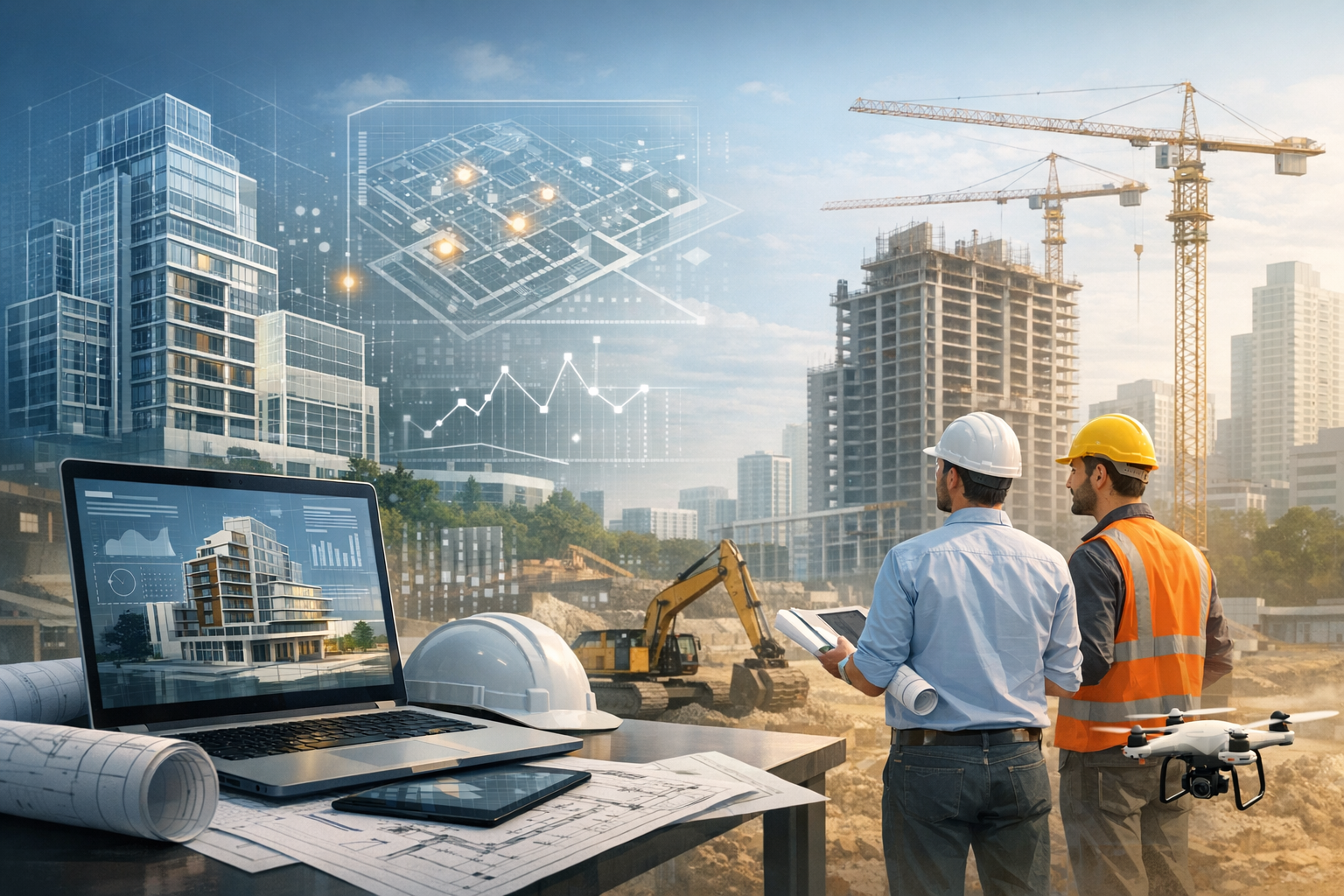
Artificial Intelligence (AI) is not just a buzzword; it’s an innovation transforming industries worldwide, and the building and construction sectors are no exceptions. Rapid advances in AI are redefining how construction projects are planned, executed, and managed. From design to on-site execution, AI is propelling the industry into a new era of efficiency and sustainability. In this post, we explore five cutting-edge ways AI is changing the building and construction industries.
1. Optimizing Design with AI-Powered Software
The design phase of any construction project is crucial. AI-powered design tools are now enabling architects and engineers to create more sophisticated models, optimizing space and resource allocation.
Generative Design
One standout application of AI in design is generative design. Leveraging algorithms and machine learning, software can generate a plethora of design options based on predefined constraints and parameters. Autodesk, for instance, provides tools that allow designers to explore hundreds of design variations in mere hours. This not only saves time but also pushes the boundaries of creative potential, resulting in more efficient and innovative structures.
Predictive Analytics in Design
AI’s predictive analytics capabilities help detect potential design flaws early in the process. By analyzing past projects and existing data sets, AI algorithms can foresee issues that might arise, allowing for preemptive troubleshooting. This predictive insight is invaluable for risk management, ensuring the longevity and safety of the structures once built.
2. Enhancing Construction Management
Managing a construction project requires juggling multiple tasks simultaneously, and AI is stepping in as an assistant project manager, enhancing efficiency and reducing human error.
AI-Powered Project Management Tools
AI tools can analyze vast streams of data from ongoing construction sites to provide real-time insights. Tools like Buildots harness AI to compare current states of progress with project plans, highlighting discrepancies, and suggesting corrective actions. This real-time analysis leads to better decision-making and ensures projects stay on track.
Automated Scheduling and Resource Management
AI allows for automated scheduling, optimizing the allocation of resources and workforce according to project needs. This prevents delays and minimizes waste, highlighting construction's move towards smarter, leaner operations. As a result, projects are completed on time, staying within budget constraints.
3. Improving Safety Standards
Construction sites are inherently hazardous, and enhancing safety is a priority for all stakeholders. AI applications are proving instrumental in advancing safety standards in the industry.
AI Surveillance and Monitoring
Intelligent video analytics, powered by AI, can monitor sites for unsafe behaviors and conditions. Systems can automatically flag risks, such as workers not wearing helmets or blockages in escape routes, ensuring that immediate corrective measures are taken. For example, companies like Smartvid.io are already implementing such solutions to enhance workplace safety.
Predictive Safety Analysis
AI can analyze historical data to predict and thus prevent accidents. By identifying patterns that typically lead to safety incidents, AI provides managers with the foresight needed to implement preventative strategies. This proactive approach is not only reducing the number of incidents but also fostering a culture of safety-first within the industry.
4. Facilitating Sustainable Construction Practices
Sustainability is more than just an ideal; it is a necessity in modern construction, given the urgent need to address climate change and reduce environmental footprints. AI is at the forefront of facilitating sustainable construction practices.
Efficient Material Usage
AI helps reduce waste by optimizing the use of materials, calculating precise quantities needed for each phase of construction. This minimization of excess not only reduces costs but also curtails the environmental impact of waste.
Energy-Efficient Building Operations
Post-construction, AI continues to play a part by managing the built environment’s energy usage. Through smart sensors and IoT devices integrated with AI, buildings can automate energy systems to ensure optimal usage. This dynamic approach to energy management is not only cost-effective but also a significant move toward achieving greener, more sustainable buildings.
5. Revolutionizing On-Site Execution with Robotics
Robotics, powered by AI, is transforming on-site execution, taking on labor-intensive tasks and increasing precision and efficiency.
AI-Driven Construction Robotics
AI-driven robots can perform tasks such as bricklaying, concrete dispensing, and even painting with unmatched precision and speed. For instance, companies like Construction Robotics are developing robots capable of seamless bricklaying, which drastically reduces construction time and labor costs while improving quality.
Augmented Reality (AR) Integration
Augmented Reality, combined with AI, is empowering workers on-site by overlaying digital information over physical spaces. AR tools improve accuracy and efficiency by guiding workers through complex assembly tasks and updates. This integration ensures that projects are executed to design specifications and standards, minimizing costly errors and rework.
In conclusion, AI's impact on the building and construction industries is multifaceted and profound. It is shaping every stage of the project lifecycle, from conceptual design to the execution of the final build and beyond. As AI technology continues to advance, its role will undoubtedly expand, ushering in an era of unprecedented innovation and efficiency. Future industry leaders who embrace these AI trends today are positioning themselves for success in tomorrow’s competitive landscape. For businesses in construction, the time to harness the power of AI is now.